Checklist
✅ If you never posted before - post at least once
✅ Build a content plan using ideas hunting methods
✅ Post regularly (2-3 times a week, or 2-3 times a month)
Hot to start and optimize content creation on LinkedIn
The most challenging optimization of the LinkedIn growth journey is content creation.
It's embarrassing to post and get no reactions, hard to come up with content idea and can even be risky to your reputation.
But that's also the biggest advantage of it - most people don't do it, and it gives you the chance to stand out.
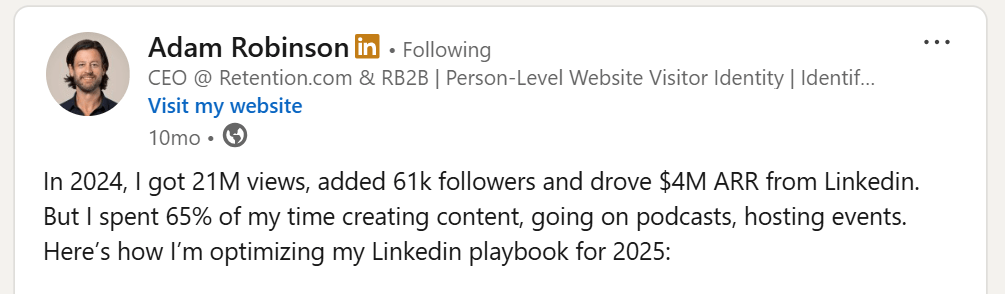
Some people, like the CEO of RB2B, Adam Robinson, make most of their business growth from organic traffic from their LinkedIn activity, as he shares in many of his posts
Ideas hunting: Find the best performing posts of thought leaders in your niche
The best posts answers question that people ask in your niche.
Locate 2-3 creators that posts of influencial figures in your niche
If you don't yet follow relevant creators, prompt into ChatGPT or Gemini: "Find LinkedIn creators who is posting about [name your niche] whos posts gets high levels of engagement" You can add "Keep the answer short" to avoid too much information.

Use AI to analyze their most successful topics and themes
Before starting this step of analysis with AI, spend some time reading about the thoght leaders you are going to analyze.
Read their featured and recent posts, see who is actually commenting and what do they say. Use the opportunity to send connection requests to some of their followers which you find interesting.
Invest at least 2-3 hours into reading and learning, before moving to the more automated approach a that is described below. Only this way you will really understand the results of the AI analysis.
Then, start the AI analysis: visit the profiles of the creators, go to their posts section, click CTRL A + CTRL C to copy everything on the page, go back to the AI chat and prompt (below the image)
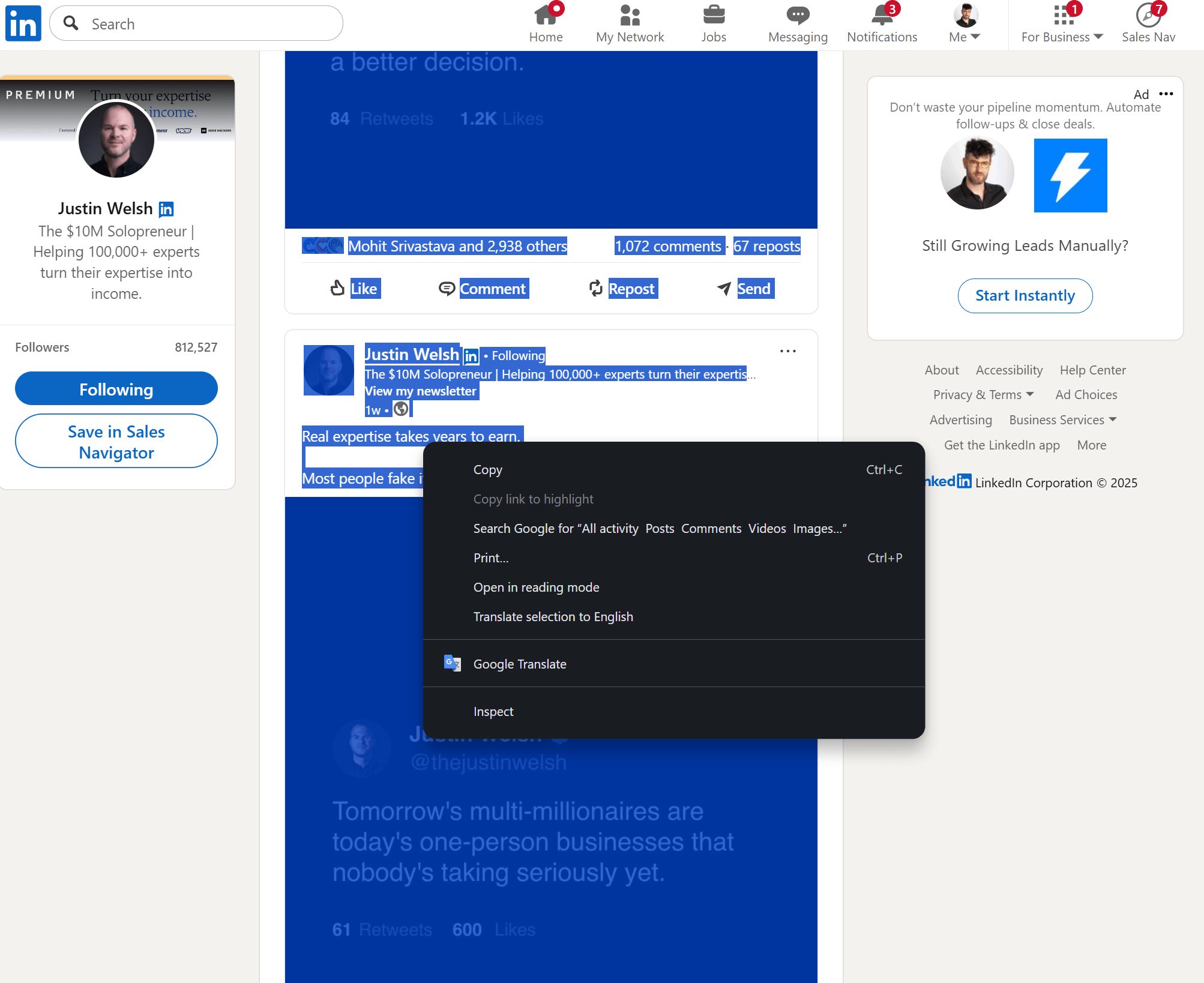
Prompt:

Repeat the process with a few different creators, and find which topics repeats across the industry
Find what people ask and struggle with
Now that you've got a list of topics, you have an idea of what themes your next posts might follow. But your still missing depth. You need to find what people want to know, or struggle with, in relation to these topics.
Take the topics you feel most connection with, and prompt the following questions
- For general results: "What are the most common questions people ask about [topic] inlude references to online discussions"
- For recent results: "What are the most common topics people have been discussing about [topic] in the last 90 days. Include references to online discussions"
- Other variations you might want to try: "common complaints and struggles people mention they have with [topic]", "most amazing findings people shared about [topic]" and "most loved solutions people recommend for [topic]"
Share your authentic & vulnerable take
It might sound vague "just be authentic", and in some sense there is not just one way to find your authentic voice. But there are a couple of best practices that might help.
Authenticity
Share stories that happens to you in real life., Your real experience, your real numbers and the real people you meet, or recently learned from about the topic (don't forget to tag them)
Vulnorability
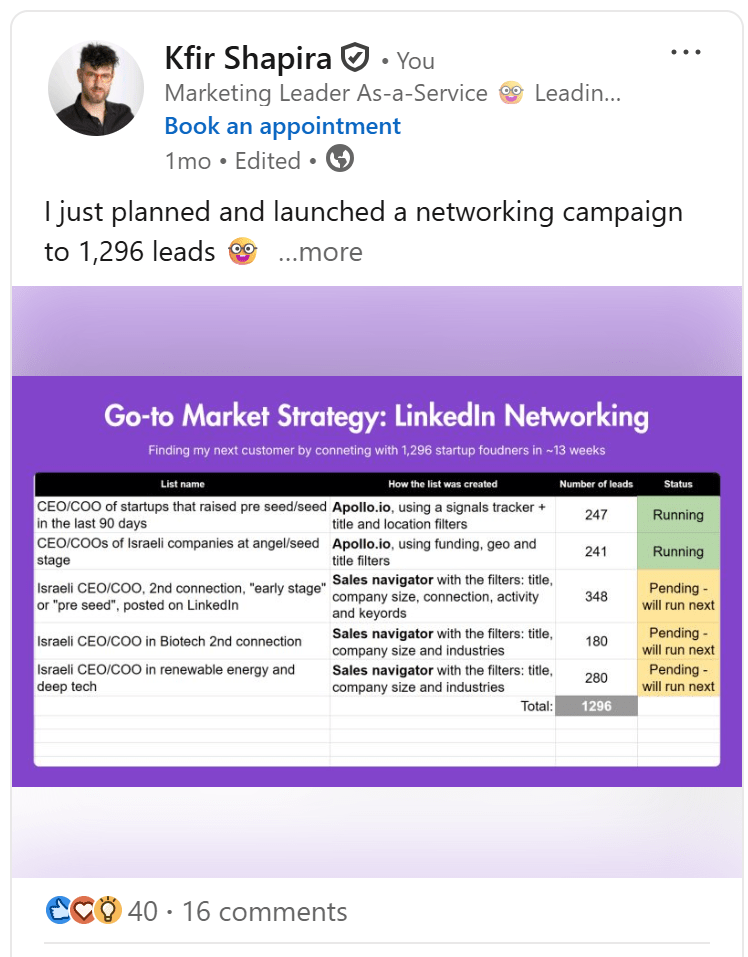
Be honest about fails, but it's not just about saying look how I failed, it's more about opening discussions on how to get better. Instead of trying to show off and say something about a topic you are not 100% sure about, invite your network to a discussion and ask them for their take on the topic.
The post below admits of actually not knowing how to verify an account while trying to identify as a LinkedIn profile optimization expert. The actual right way was then explained by another person, which is tagged and thanked:
Engage within the 60 minutes before and after posting
The 60-Minute "Test Phase"
When you hit publish, LinkedIn puts your post on trial. It shows your content to a small sample of your network to measure Engagement Velocity. Metrics that are being checked are how quickly people stop to read (dwell time) and interact. If this test group engages within the first hour, the algorithm recognizes the content as valuable and expands its reach to a wider audience. If the momentum stops, the exposure drops immediately.

Fueling the Algorithm
This is why the "Golden Hour" strategy is critical. By commenting on other posts 60 minutes before and after you publish, you drive curiosity and traffic back to your profile during this sensitive window. It's like adding "fuel" (likes and comments) that your post needs to pass the initial test and trigger broader distribution.
This should be part of your commenting strategy.
Commenting on comments
When someone comments on your post:
- Engage in the conversation with them, comment on the comment (when appropriate, with a question)
- Make sure you are connected, and if not - send a connection request
- Check their recent posts and engage with it too
What to optimize next
Next, review the full list of the LinkedIn profile optimization guides to make sure you do not miss any of the optimizations